
MARKET
Pune
launching city-first
SCOPE
Brand + Platform + GTM
End-to-end engagement
PLATFORM STATS
verified schools listed
STUDENTS
served on platform
THE BRIEF
A marketplace with two sides to solve.
DryveGuru needed more than a website. They needed a brand that students would trust and schools would want to be part of — and a platform that could serve both audiences simultaneously without compromising either.
On one side: learners in Pune searching for the right driving school, comparing prices, reading reviews, and booking lessons. On the other: driving schools that needed a reason to list, a partner page that felt credible, and a simple way to be discovered. Building for both without losing focus on either is the hardest part of any marketplace brief.
The brief also included a go-to-market strategy — not just launch the platform, but answer the harder question: how do you get supply and demand moving at the same time?
WHAT WE DELIVERED
THE CHALLENGE
Two audiences. One platform.
Neither can wait for the other.
Every marketplace faces the cold start problem: students will not use a platform with no schools, and schools will not list on a platform with no students. The GTM strategy had to solve this sequencing problem before a single line of code was written.
The cold start problem
No schools means no students. No students means no schools. We solved this by prioritising supply acquisition first — getting schools listed before any student-facing marketing. The partner page and school onboarding flow were built and launched before the consumer homepage.
Brand that works for both audiences
Students needed to trust DryveGuru enough to make a booking decision. Schools needed to trust it enough to list their business. The same brand had to earn both relationships — friendly and approachable for consumers, credible and professional for B2B partners.
Content as the SEO moat
In a local marketplace, organic search is the most valuable acquisition channel. The educational hub, quizzes, and resources section were not features — they were the long-term SEO strategy, building topical authority around driving education before competitors could.
City-first then scale
Launching in all of India is a trap for early marketplaces. Dominate Pune first — get density, get reviews, get word of mouth — then expand. The platform architecture was built to support multi-city from day one, but the GTM kept all energy focused on one market at launch.
THE PLATFORM
What we shipped.
A full consumer marketplace with school discovery, educational content, and a B2B partner acquisition flow — all in one platform.
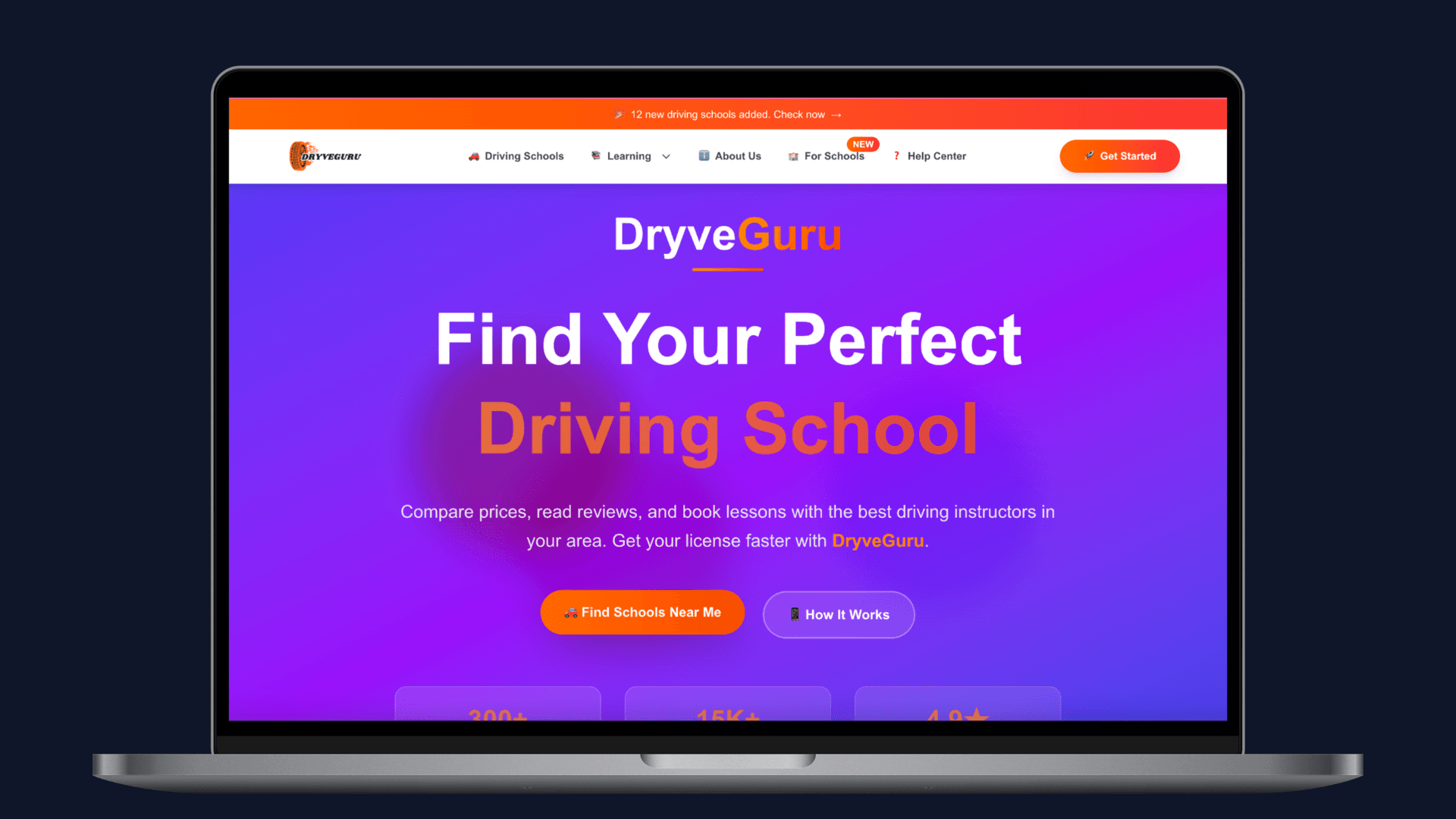
The homepage — school discovery, social proof, and a clear path to finding the right instructor.
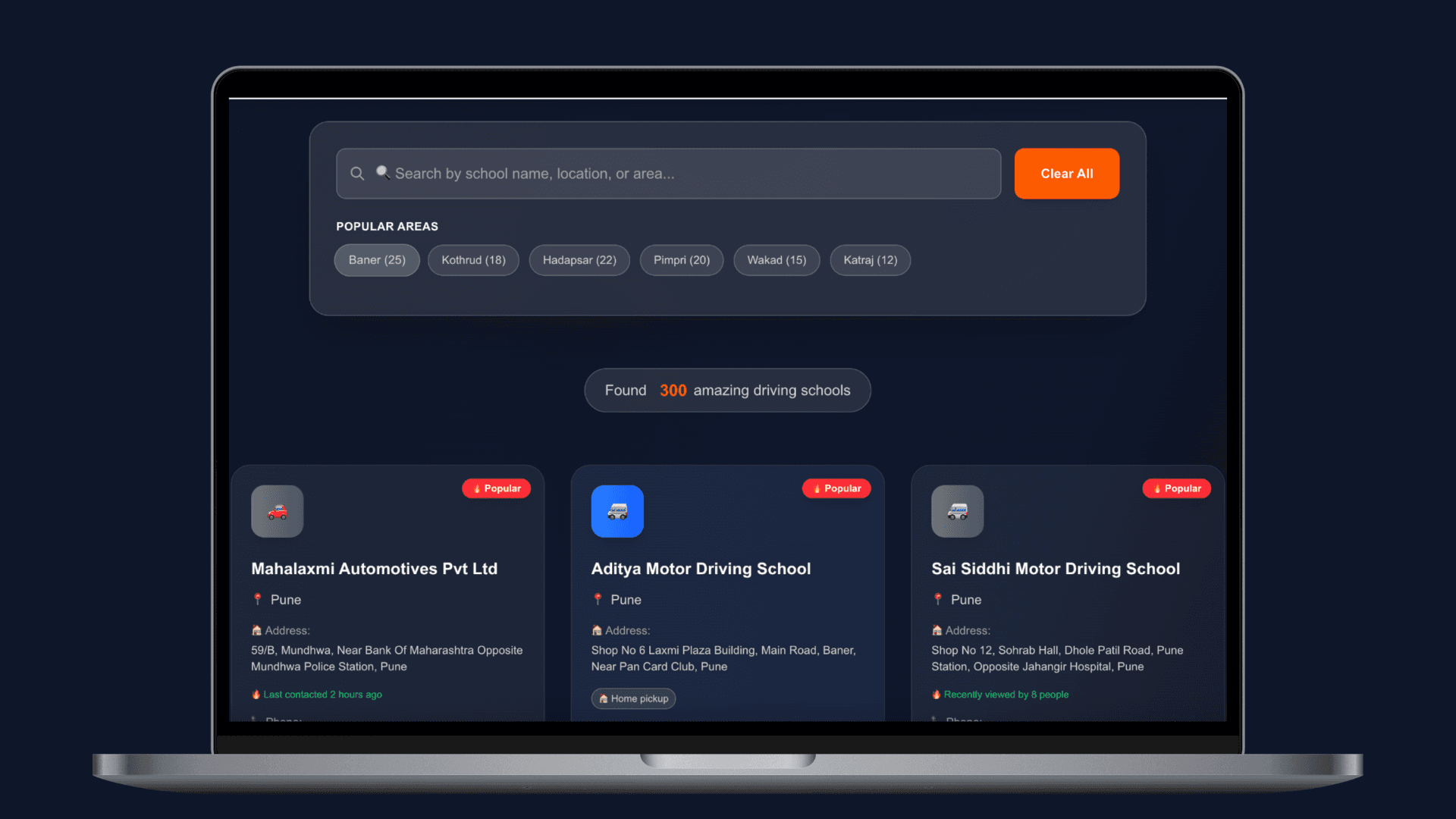
300+ verified schools with ratings, pricing, and direct booking. Filterable by location and specialisation.
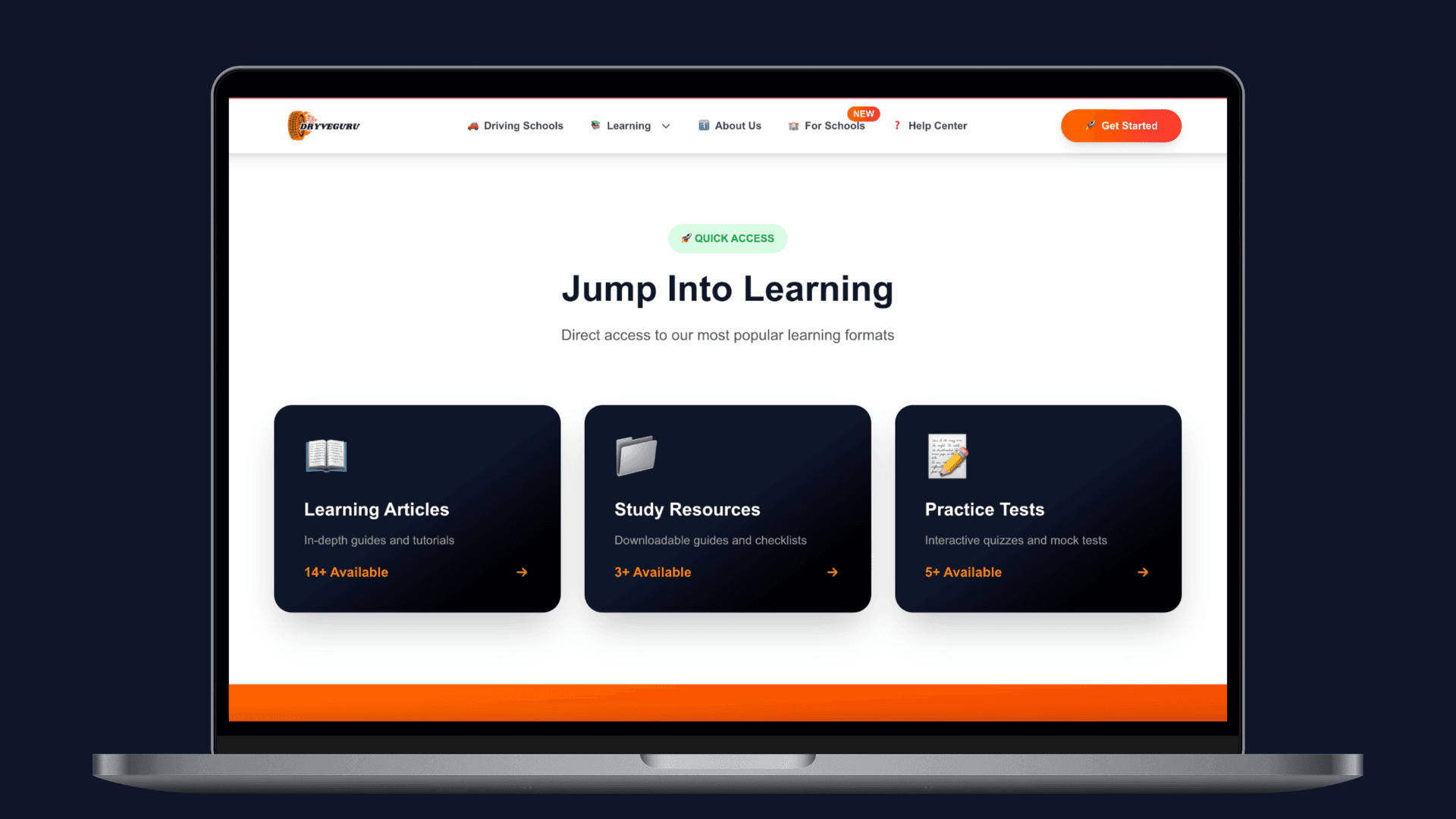
The educational hub — courses, quizzes, and resources building topical authority and keeping students on platform.
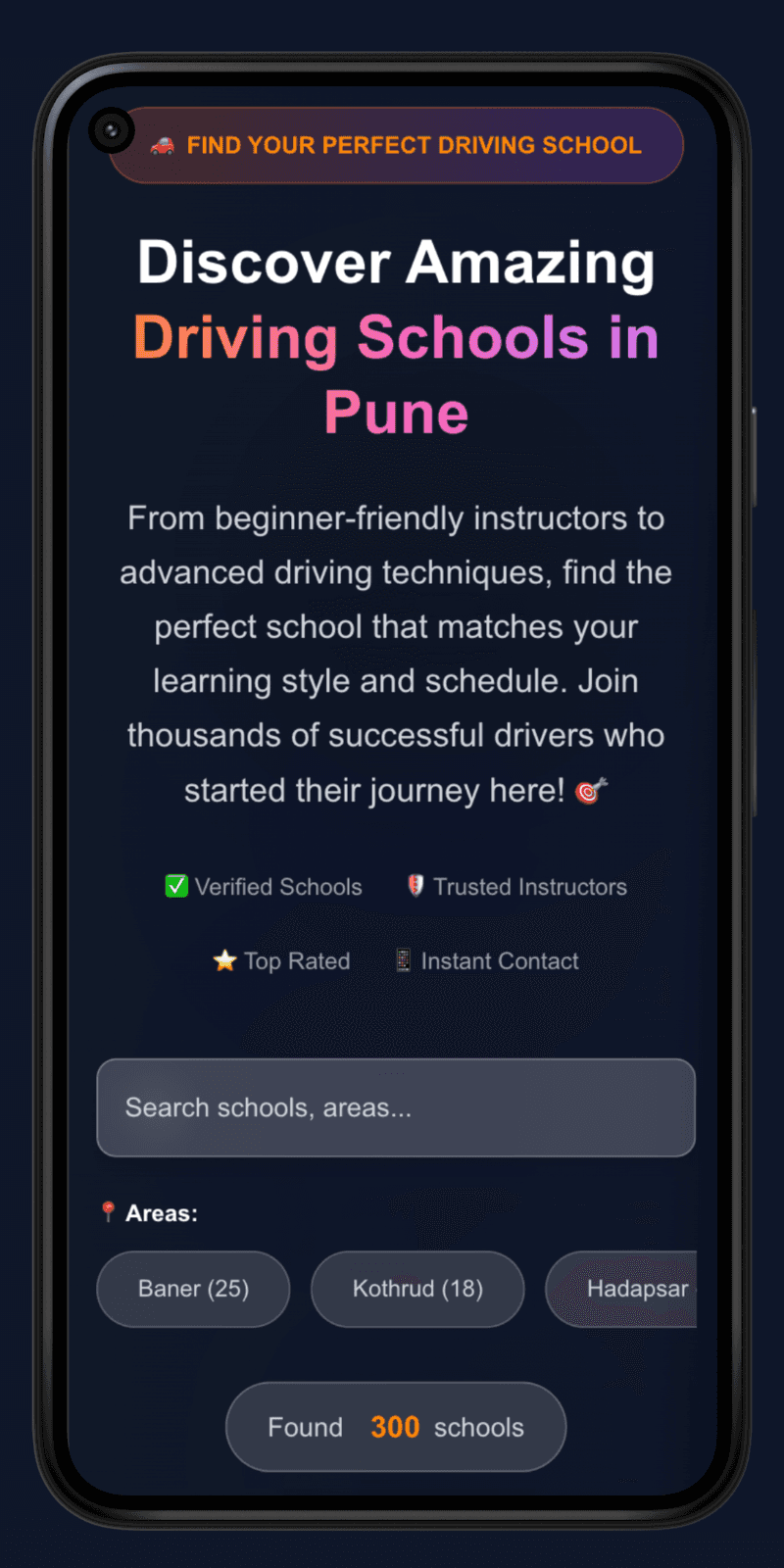
Mobile-first design — built for how students actually search for driving schools.
GO-TO-MARKET STRATEGY
Supply first. Then demand.
Then content.
The GTM strategy had three sequential phases. Each phase created the conditions for the next. Skipping any of them would have broken the marketplace flywheel before it started spinning.
PHASE 1 — SUPPLY
Get schools listed before students arrive
We launched the partner acquisition page and school onboarding flow first. Direct outreach to Pune driving schools with a clear value proposition: free listing, verified badge, and access to students actively searching. The goal was 50 listed schools before any consumer marketing spend.
SUPPLY BEFORE DEMANDPHASE 2 — DEMAND
Activate student acquisition
With schools listed, consumer marketing could begin. The homepage, school cards, and review system were launched together. Local SEO targeting 'driving schools in Pune' and related queries was the primary acquisition channel — zero paid spend in phase 2, organic only.
ORGANIC FIRSTPHASE 3 — CONTENT MOAT
Build the educational authority layer
The educational hub, quizzes, and resources section were activated in phase 3 — after the core marketplace was running. Content targeting long-tail driving education queries (how to pass RTO test, learner licence documents, etc.) built compounding organic traffic that competitors could not replicate quickly.
LONG-TERM MOATWHAT WE BUILT IT WITH
Built to scale beyond Pune.
The platform was architected for multi-city expansion from day one — even though the GTM kept focus on Pune at launch. Adding a new city requires configuration, not rebuilding.
Next.js 14
Full-stack React framework — school listings, educational content, and partner pages all in one codebase.
TypeScript
Type-safe throughout. School data schemas, review types, and filter logic all fully typed.
Tailwind CSS
Utility-first styling with custom DryveGuru design tokens — orange accent system and dark navy surfaces.
Vercel
Edge deployment with automatic preview URLs and instant rollbacks on every push.
SEO Architecture
Structured data, dynamic sitemaps, and metadata generation for every school listing page — built for local search from day one.
Multi-city Ready
City-scoped routing and data architecture supports expansion to Mumbai, Bangalore, and beyond without platform rebuild.
THE OUTCOME
300+ schools.
15,000+ students.
One city.
DryveGuru launched in Pune with over 300 verified driving schools listed, a fully functional school discovery platform, and an educational content hub driving organic traffic from day one.
The supply-first GTM approach worked — schools listed before students arrived, which meant the platform had real inventory when consumer marketing began. No chicken-and-egg problem at launch.
The platform is live, growing, and built to expand beyond Pune when the time is right.
“We needed someone who could think about the business, not just build the product. Unmarketed Labs came in with a brand, a website, and a plan for how to actually get schools listed and students searching. That is what made the difference.”
— Founder, DryveGuru
HONEST REFLECTION
“The educational content hub is the right long-term bet — but it takes time to rank and compound. With more runway, we would have started content production earlier, before the platform launched, so the SEO foundation was already building while the marketplace was being seeded. Publishing 10 strong educational articles before launch would have accelerated organic acquisition significantly in the first three months.”
Building a marketplace?
Two-sided, local, or both.
Tell us what you are solving.